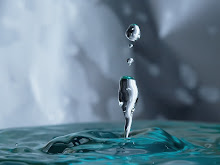
Solutions about the expense of water.
Nowadays, there are a lot of droughts in the world and it is very important to save water.
We can start with saving water in our homes. There are a lot of things that you can do to combat the problem.
In your home.
When you brush your teeth, you should use a glass. Close the faucet when you don't need water.
Don't use the wc as an ashtray and put a wastepaper basket. You will save 10 l of water.
Water your plants in the morning or in the night. In the evening, water evaporates very quickly.
Don't clean your car with a hose. You can take it to a car wash. It is easy, cheap and it helps to the saving of water.
Also, you can use your dishwasher and clothes washer for only full loads or, if you wash dishes by hand, don't leave the water running.
It is very important that you take shorter showers. In this way, you will be able to save a lot of water.
In Spain.
On the one hand, there are two associations in Spain taking care of water, the PNR and the PHN. These associations have created three new criterions.
The first regulation is the perfect coordination between the Agriculture, Fishing and Diet Ministry and the Environment Minstry. They should put in common measures to guarantee the saving of water.
The second regulation is the efficiency in the use of water. We should obtain the maximum output of the productions while we save percentages of use of very high hydraulic resources.
Finally, the third regulation is to promote the technological innovation.
On the other hand, the government can make campaign to give an incentive to save water. In this way, people will become away of the danger of waste water.
In the world.
In the world we can do a lot of things too. For example, we can plant autochthonous shrub and plants because this type of plants consumes the half of water that the exotic plants.
Another solution is take out the salt of seas with specialty factories. In this way, we will be able to use the water of seas and droughts will finish.
As you may have noticed, you can do a lot of things to combat droughts. Now, it is the moment to carrey out these pieces of advice.
June 15, 2009

WATER
savings at home
One way to save water at home is to close the tap when we wash our teeth, turn off the tap and open while just brushed us to rinse
Another way is not to take showering because it spends much less water and it is faster.
Fill the washer all that can be used to use less water.
Other possibility is least use the dishwasher is another option, if there are few dishes to wash it is best to do it by hand and only use it when we see who can fill a whole.
Use nozzles for the garden is another way of saving water, these devices share the best water and its consumption is lower. Avoid using common showers, and many of these are running needlessly and drop lots of water.
Choosing plants to water at night for no sunshine, when water at these times the water will evaporate and water would have to choose another type of plant water is used only once
To save water, another option is to fix faults quickly as these could cause an unnecessary loss of water, for example the failure of the machine could cause the loss of much water.
Saving worldwide
Using rainwater: These tanks are designed for the collection of rainwater. For installation, the pipes should be driven from the rooftops and balconies to the reservoir. It takes an integrated filter to prevent entry of particles greater than 0.55 mm. This will preclude the entry into the deposit of leaves, sand, bird droppings, ... The entry of such particles in a reservoir with water, causing problems of odor and decomposition of organic matter.
Dropper betting by saving water and energy through education and promotion of basic savings schemes for sustainable development. A business-minded young and dynamic in order to help protect the environment from a different and revolutionary in the industry: "The combination of quality with the right price with a technical service and advice from professionals with several years of experience in our country and other countries well advanced in the environmental sector. "
Today there are many producers who are helping to improve water consumption and therefore to save and care for the ecosystem: -Eco-toilet -Eco-cuisine -Eco-shower -Economiser water tank
One way to save water at home is to close the tap when we wash our teeth, turn off the tap and open while just brushed us to rinse
Another way is not to take showering because it spends much less water and it is faster.
Fill the washer all that can be used to use less water.
Other possibility is least use the dishwasher is another option, if there are few dishes to wash it is best to do it by hand and only use it when we see who can fill a whole.
Use nozzles for the garden is another way of saving water, these devices share the best water and its consumption is lower. Avoid using common showers, and many of these are running needlessly and drop lots of water.
Choosing plants to water at night for no sunshine, when water at these times the water will evaporate and water would have to choose another type of plant water is used only once
To save water, another option is to fix faults quickly as these could cause an unnecessary loss of water, for example the failure of the machine could cause the loss of much water.
Saving worldwide
Using rainwater: These tanks are designed for the collection of rainwater. For installation, the pipes should be driven from the rooftops and balconies to the reservoir. It takes an integrated filter to prevent entry of particles greater than 0.55 mm. This will preclude the entry into the deposit of leaves, sand, bird droppings, ... The entry of such particles in a reservoir with water, causing problems of odor and decomposition of organic matter.
Dropper betting by saving water and energy through education and promotion of basic savings schemes for sustainable development. A business-minded young and dynamic in order to help protect the environment from a different and revolutionary in the industry: "The combination of quality with the right price with a technical service and advice from professionals with several years of experience in our country and other countries well advanced in the environmental sector. "
Today there are many producers who are helping to improve water consumption and therefore to save and care for the ecosystem: -Eco-toilet -Eco-cuisine -Eco-shower -Economiser water tank
SOLUTIONS FOR LACK OF WATER
Water
View more OpenOffice presentations from granadalarissa.
Water
View more OpenOffice presentations from granadalarissa.
December 21, 2008
EL ALGIBE DEL REY. THE LARGEST INNER WATER RESERVOIR DATING BACK FROM THE MUSLIM TIMES .

WATER
Water is the basic compound for the life of all the alive beings. Without it , there would not be life.
Water cycle
The water is the only element that can be liquid, solid and gaseous. With heat water turns into steam giving form to clouds. Clouds become condensed in the shape of rain and it falls to the land. Also with heat ice is melted.
Drinking water
The drinking water is water that we can consume without any type of danger for our health. This water is short supply, above all in poor countries.
Uses of the water
The water is a limited resource in nature and it offers many uses as agriculture, decoration,…
The water in our planet.
The water is a component of our nature and it has been present in the Earth for thousands of years. It takes up ¾ parts of the planet. The 98% of the water is salty and it is in the sea, but the sweet water consists of the water of glaciers, subterranean waters and the water of rivers and lakes.
Water is the basic compound for the life of all the alive beings. Without it , there would not be life.
Water cycle
The water is the only element that can be liquid, solid and gaseous. With heat water turns into steam giving form to clouds. Clouds become condensed in the shape of rain and it falls to the land. Also with heat ice is melted.
Drinking water
The drinking water is water that we can consume without any type of danger for our health. This water is short supply, above all in poor countries.
Uses of the water
The water is a limited resource in nature and it offers many uses as agriculture, decoration,…
The water in our planet.
The water is a component of our nature and it has been present in the Earth for thousands of years. It takes up ¾ parts of the planet. The 98% of the water is salty and it is in the sea, but the sweet water consists of the water of glaciers, subterranean waters and the water of rivers and lakes.
THE NATURAL RESERVOIR OF SIERRA NEVADA

Granada has a great natural reservoir called Sierra Nevada. It is the most powerful in the “Sistema Penibético”.
Granada possess multitude of water springs of Sierra Nevada.
Granada supplies with the water of the Genil river. This water is taken from the Canales’ reservoir.
Subterranean waters of the aquifer of La Vega of Granada are another source of supply
THE HISTORIC PATRIMONY

Romans made aqueducts (for example, the aqueduct that is in the mosque, in the Mirador de la Sierra), bridges (like the Puente Romano on the Genil river) and mechanisms (like the Arquímedes’s screw, the crankshaft and hydraulic rollers).
Arabs added their wisdom from East and they introduced a lot of improvements.
Uses of the water.
It had three uses:
-Sacred use: Cleanliness and ablutions.
-Social use: Urban and domestic supply and public and private toilets.
-Agricultural use: Conductions of water for irrigation and system of irrigation.
Supply of water – Albayzin
The water arrived at Albayzin from two points.
On the one hand, the water arrived from Fuente Grande (Alfacar) through the Acequia of Aynadamar. It covers Viznar, El Fargue, Pagos de Aynadamar, Manflor, Albayzín and Alcazaba. A branch arrives to Sacromonte.
On the other hand, the water arrived at Darro river, where the Acequia of San Juan starts. The water goes for right bank of the river, enters for behind of the Palace of the Córdova and flows San Juan of the Reyes street.
The water arrived at the public cisterns and later, the water arrived at private cisterns and pitchers.
The most important palaces had a private cistern.
The most popular system of storage of water was the great pitcher of ceramics.
The albaizín was declared as the World Patrimony of UNESCO in 1994.
EL ALJIBE DEL REY

Its name is Old Aljibe and Big Aljibe of Alcazaba. This “Aljibe” or well is in the “Plaza del Cristo de las Azucenas”, within the old “Alcazaba”.
At present its vaults stay inside the “Carmen del Aljibe del Rey”. This well or inner reservoir has got four parallel naves covered with vaults of half a cannon. It has got a simple front page with a half-point arch. Its length is 10,63 m.

It’s the largest Moslem reservoirs in Granada because it has got 300 m3 of inner capacity.
It was the only one that the water carriers could take water, thanks to its large size.
It was restored in 1985 with the elimination of the remains of lime ,during the restoration was found a brick of 1824, the year when the facade of “Aljibe” was built.
Nowadays, this building is owned by the municipal headquarters of the foundation Albaicín and now headquanters of the foundation Emasagra.
November 25, 2008
June 25, 2008
WATER WORLD EXPO ZARAGOZA

Water World Expo 2008 Zaragoza
Enthusiastically expected, the World Expo 2008 Zaragoza, Spain, finally lifted its heavy curtain on June 13. With the theme of Water and Sustainable Development, the Expo was participated by altogether 105 countries and 3 international organizations. The Zaragoza Expo lasts for three months.

The Water element all through the Expo
The World Expo 2008 a confirmed world expo taking water as its theme and centered on Water and Sustainable Development, the Water element is fully displayed in the design of expo halls and buildings and in the arrangement of big events and various performances. In the exhibiting areas, the Water element is everywhere, demonstrating the inspiration of designers’, and Water is mostly applied to the design of the Expo Park as a whole and its corollary facilities. A case in point is the three theme pavilions of the Zaragoza Expo. One, with the theme of Water: Limited Resource, is designed like a giant bridge.

Another one, with the theme of Water: Life, has an outward appearance of a water tower just like a huge sweep. The last one, with the theme of Water Scenery, is actually the biggest fresh water aquarium in Europe. The feature exhibitions at the Theme Square of the Expo emphasize the interdependence between human beings and water in different aspects. Exhibitions with the theme of dry and thirst, water and city, territory-water and energy, water of extremes, water as shared resource and enlightenment of water, etc cover a variety of contents and are thought-provoking.
In addition, the Water Forum runs through the Expo as the big event where theoretical rethinking and discussion are carried out. Experts, engineers, politicians, managers, various associations and non-governmental organizations will hold all types of conferences during this period. The Forum is to be closed when the Expo concludes, marked by the successful closing of the International Conference on Water and Sustainable Development and the signing of the Zaragoza Declaration.
June 16, 2008
June 15, 2008
May 17, 2008

We are threatened by the water shortage
This summer is expected to be difficult for the farmers of the Thessalian plain. According to the prefecture of Larissa, the total rainfall from September 2007 until January 2008 was decreased to 33%. Also transport of water from the lake Plastira –the main resource of irrigation and water supply for the Thessalian Plain-cannot be conducted because its reserves have been decreased to 30 million cubic metres, compared to the previous year.
“We enter a season when the importance of water will be still more important and critical”, the lecturer in the department of exploitation of natural resources of Agronomic University C. Karavitis declared on Greek TV. “In the agriculture”, as he said, “is spent the 85% of water that we consume globally annually and the rest 12% only goes to the urban centres and only 3% in the industry. The municipalities of the Thessalian plain can use this summer only the water that is stored in the barrages, according to a research of SKAI TV(a greek channel), as part of a campaign for the saving of water.
The General Secretariat of Region proposed a plan for the confrontation of water shortage, according to which, in the first phase, all the illegal dams along the river Peneus will be destroyed. "The farmers of the Thessalian plain use more underground water for the irrigation, and as a result it has eliminated", G. Migiros the professor in the Agriculture university of Athens, declared on TV. He pointed out at the same time, that the State has not done the required works for the right management of surface waters.
Meanwhile, in a meeting that took place, there was intense disagreement between the authorities of Larissa and Karditsa about water of Plastira lake. Lake Plastira has been a source of controversy as the farmers of Karditsa and Larissa both claim the water resources.
It is reminded that according to studies, the water deficit of that lake amounts to 60 mill. cubic metres and the scarce-few reserves do not appear to suffice for the water supply and irrigation of the plain. As a result, both the farmers of Larissa and those of Karditsa, claim the remaining of very few .
In Karditsa the authorities are concerned with the water supply of 100.000 residents of the prefecture, as they express fears that the overpumping will affect the quality of water.
Speaking on the television, the prefector of Larissa , pointed out that among the measures that the prefecture takes is to prompt the farmers to turn to less hydric plants cultivation.
A committee for the management of water , the constitution of which has been announced by the general secretariat of the Region of Thessaly, will have the responsibility of the continuous measurement of water which used for irrigation from lake Plastira, but also from the Peneus river.
Moreover, shortly a big campaign in the Region of Thessaly will begin so that all illegal dams that exist along the Peneus river banks will be destroyed because they are to blame for a big water waste.
Finally, it was decided that the municipalities of Thessaly that have barrages, should make use of only stored water .

Rainfall decreases
Rainfall will decrease in Greece by 20 to 30% in the following years. However the cases of strong storms will increase. That’s what scientists that participated in the meeting on the subject "Water in the period of Climatic Change" that organised the network Mediterranean SOS and the Metsovio Polytechnic School of Greece. During the meeting it was pointed out that at least the 60% of wetlands in the Mediterranean have been lost and serious problems of sufficiency of water up to the year 2025 are expected to exist. “The crisis from the insufficiency of water will change the way that we live”, scientists reported. “We program the manufacture of many small irrigatory works so that the water will not pour into the sea”, declared the minister of Rural Development Alexandros Kontos. He pointed out at the same time that it is essential that we make citizens aware of a reasonable use of water. "Water is commodity and we should use with wisdom in order to have it; the water shortage is related to our behaviour. Speaking on TV the chairman of network Mediterranean SOS, Nikos Hrysogelos claimed that the citizens are supposed to change habits. He added that efforts are needed in order to save water. This effort begins from the use that the households do, mentioning that there are exist possibilities of recycling water in the household , using it in a lot of activities.
May 15, 2008

May 11, 2008
April 5, 2008
THE CITY OF LARISSA IN GREECE
 Larissa is the capital city of the Thessaly periphery of Greece and the capital of the Larissa Prefecture . It is a principal agricultural centre and a national transportation hub, linked by rail with the port of Volos and with Thessaloniki and Athens. The population of the greater area is around 250,000 and it is the fourth largest city in Greece. A major commercial and industrial centre, Larissa sits in the middle of the plain of Thessaly, a few kilometers off the Athens-Thessaloniki National Road. According to archaeological evidence, the capital of Thessaly, Larissa, lies atop a site that has been inhabited since the tenth millennium before Christ.
  Larissa is bordered by extremes; the North is dominated by the imposing presence of Mount Olympus, while to the South and Southwest lies the great plain of Thessaly, the largest in Greece, a gold-green image which gently fades into the deep blue expanse of the Aegean Sea. Legend has it that Hippocrates, the Father of Medicine, died here. Larisa is a city that combines the remains and color of the long passed Turkish rule and the Ottoman culture, with the Hellenic cultural and architectural style of the beginnings of the 20th century.
A city that also combines the tranquillity and the relaxed rhythm of the lazy river of Pinios, the many storks that build their nests on the tallest buildings of the city and the sleepy movements of the river fishermen, along with the hubbub of a busy, bustling town. After many years of uncontrolled growing the city has managed, to restore a harmonic relationship with its river and the surrounding environment in general.
 The site of the excavations of the ancient theater of the city, located at its very center, have caused a major transformation of the city, that brings it more close to its origins, bonds it tightly to the surrounding environment and restores its classic atmosphere. The ancient city of the theater had a capacity of 10000 spectators. At the outskirts of the nearby town of Achileion the ruins of the local castle have been excavated. The ruins are dated back to the 15th century but the original compound was erected sometime during the late Neolithic period.
The visit to the Folklore and Historic museum of the city may be proved to be most rewarding for the traveler. Also rewarding is a visit to the city's National Gallery with its fine collection of paintings, only second in significance after the National Gallery of Athens.
 There is no form of entertainment that can be sought within the city of Larissa without meeting satisfaction. Cafes, bars, night clubs, bouzouki halls, elegant restaurants, traditional taverns, theatres, cinemas, and a large market, are all available. The sports opportunities are limitless, as organized beaches are less than two hours distant from the skiing resorts and base camps for those who wish to climb to the peaks of the Mt. Olympus, home of the Olympian Gods, or Mt. Ossa (Kissavos), the base of their defeated rivals in the war for cosmic dominance, the great Titans.
  AEL is a Greek association football club based in the city of Larissa.
The team currently competes in the Super League Greece. AEL was 2007 Greek Cup winner. AEL currently plays at the Alkazar stadium, AEL's home since 1964. However plans have been approved to build a new ground on the same site. The new AEL Arena will increase the capacity for AEL fans from 13,108 spectators to 21,000 and it will probably be completed in early 2009.
April 2, 2008
THE ALHAMBRA. ONE OF THE WORLD´S WONDERS

The Alhambra was a palace, a citadel, a fortress and home of the Nasrid Sultans, high government officials, servants of the court and elite soldiers of the Nasrid Dynasty (1238-1492), the last Islamic sultanate in the lberian Peninsula. Together with the Mezquita (Great Mosque) of Cordoba, the Alhambra is one of the most widely known of all Islamic works of art. The Nasrid Sultans chose as the site for their court the Sabika hill, one of the foothills of Sierra Nevada on the plain of Granada, which constituted an excellent site from which to keep watch over the capital of their kingdom and the surrounding area. From the beginning of the XIII century, the small older buildings, mainly watchtowers, some of which dated back to before the XI century, gradually grew into a huge walled site which clearly intended to be both palace and court.
Within this gradual change, different stages of development, grandeur and decadence can clearly be seen through the various works of art and buildings erected over the years. The Alhambra was not a single static construction, built at a specific date, but rather the result of an evolution, successive reforms and extensions.
Today, four groups of buildings can be identified on the Alhambra Palace hill:
Alcazaba (Fortress)
This military fortress was built on the oldest site of the Alhambra and served a purely military purpose as it was situated on the highest part of the hill, watching over the surrounding area.
Palacios Nazaríes (Nasrid Palaces)
The highlight of your visit to the Alhambra Palace will be the time you spend in the these Royal Palaces which consist of a number of brilliantly designed and decorated function rooms and courtyards that were used by the Muslim rulers for different purposes.
Generalife Gardens
Literally this means the garden of the architect. The area consists of beautiful gardens, fountains and patios where the Moorish leaders had their summer palace built.
Medina (town)
The Medina was created to house craftsmen and serve the needs of the court. It occupies the largest part of the walled area within the upper Alhambra and still conserves the ruins of several houses, baths and small workshops on its typical alleys and squares.
The Medina was created to house craftsmen and serve the needs of the court. It occupies the largest part of the walled area within the upper Alhambra and still conserves the ruins of several houses, baths and small workshops on its typical alleys and squares.
THE CITY OF GRANADA

Granada lies in the foothills of Spain's Sierra Nevada mountains. Many visitors to Spain believe that if there is only one place to visit then it should be Granada.
The city has a population of 240,000 of which 80,000 are students so there is a vibrant atmosphere about the place.
Apart from the University there is only one other major employer, the Alhambra Palace, which attracts over two million annual visitors and is key to a thriving tourism industry.
The Alhambra has been described as 'the Jewel of Moorish Spain' and visitors will be overwhelmed by its beauty.
First time visitors to Granada are surprised (and delighted) to find that the tapas culture thrives in this city. Not only are they good, they're also free! Just order a drink and in most bars you'll be given a tapa with it. No wonder so many Spanish students choose to spend their formative years here!
Subscribe to:
Posts (Atom)